Deeper Look: Where Legacy Specs Crack Under Real-World Loads
Define the problem first: a chandelier is not just a fixture; it is an electrical and mechanical system with tight tolerances. In planning and procurement, nan shows up more than anyone admits. A single missing value in a spec sheet—driver rating, dimming curve, or heat profile—can ripple through the whole build. Many teams report avoidable change orders when the as-built ceiling, voltage drop, or mounting constraints hit the real room. When you bring in custom chandelier manufacturers early, the gaps shrink because load modeling, driver ICs, and thermal management are stress-tested for your site, not a lab. Look, it’s simpler than you think. The right partner checks power converters, lumen maintenance, and control protocols against your actual controls stack—edge computing nodes, gateways, latency, the lot—so the install works day one, not day ninety.

What do traditional fixes miss?
Standard catalogs assume the ceiling will accept anything. Real ceilings do not. Legacy solutions gloss over dimmer compatibility, power factor at low loads, and EMI on long runs—funny how that works, right? Spec drift happens when a designer picks a look first and hopes the drivers fit later. Then come flicker at low dim levels, overheated housings, or a CRI miss that ruins finishes. Field techs troubleshoot by swapping parts until it passes inspection. That is slow and costly. A better path ties mechanical hang points, wiring gauge, and driver topology to the actual control scenes and schedules upfront. The question is plain: why risk a “works on paper” plan when you can model the electrical and thermal envelope before the P.O.? That’s our pivot to the next step.
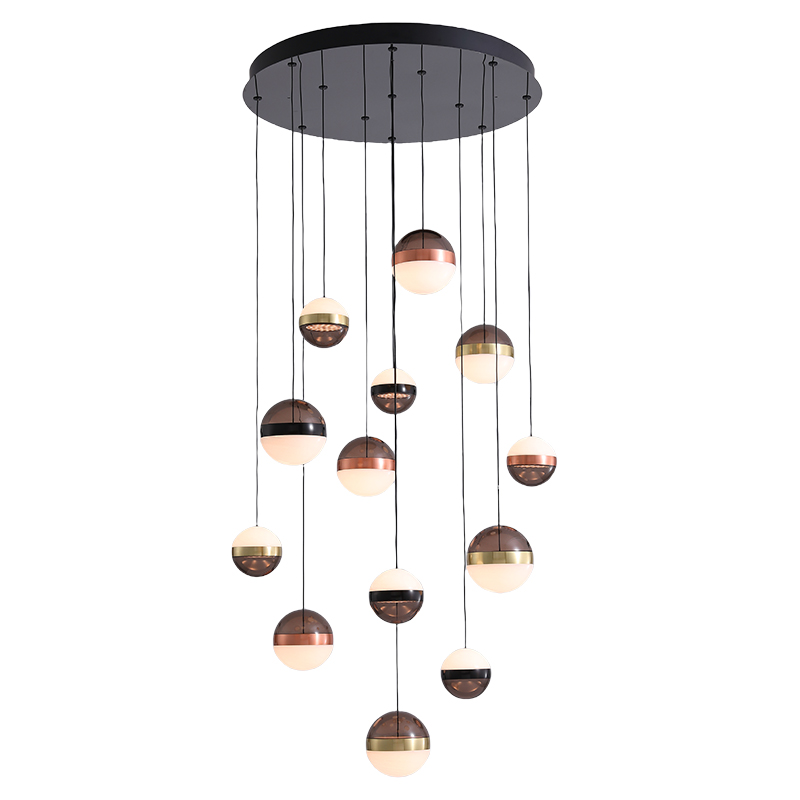
Comparative Insight: New Principles That Make Custom Pay Off
What’s Next
Forward-looking custom programs treat a chandelier as a data-backed module, not a guess. New workflows use parametric design and digital twins to map weight, heat, and output to the room model—walls, duct paths, voltage sag. On the electrical side, smarter driver ICs handle wide input ranges and finer dimming curves, while GaN-based power converters boost efficiency and reduce heat. Controls speak DALI-2 or DMX cleanly, and commissioning apps verify signal-to-noise ratio at the switch. Compared to “pick-and-hope,” this flow exposes risks early: hanging loads, conduit paths, or low-bid dimmers that clip at 10%. The same logic applies to bespoke pendant lights, where canopy depth, canopy cooling, and spectral tuning can be dialed in before you ever cut a hole—small shifts, big wins.
Real-world impact shows up in timelines. When the electrical set embeds driver placement and thermal margins, installers move faster and RFI traffic drops. UL/CE pathways are defined with the bill of materials, so compliance is not a late surprise. Networked spaces run smoother because latency, power factor, and control scenes were validated against the building’s actual backbone. You avoid the classic endgame—overnight swaps to stop flicker at 2%—and handover is cleaner. The insight from earlier stands, but sharper: match the aesthetic to a tested system envelope, and the punch list shrinks. It’s the difference between art that works and art that almost works.
Advisory close—three metrics for better choices: 1) Electrical compatibility index: verify dimming curves, driver topology, and line voltage tolerance against your control stack (mock the worst case). 2) Thermal margin: require heat modeling at ambient plus 10°C and confirm lumen maintenance over intended duty cycles. 3) Serviceability score: check access for drivers and LED boards, spares plan, and mean time to repair; if it takes a lift and two techs for a simple swap, rethink it. Choose partners who publish these numbers, not just photos. That is how you trade guesswork for outcomes—and keep your spec sheet free of NaNs the next time around. kinglong