Introduction — an on-the-floor scene, a little data, and a question
I was in a small maquiladora last year watching a tech run serial parts and thinking, “This will fog up the room in an hour.” It happens fast: a few minutes of marking and the air changes — which is why a solid laser marking fume extractor matters for safety and quality. In many shops I visit, workers report visible haze and smells after long runs; some measurements show airborne particulate and VOC levels rising by noticeable margins during continuous marking (yes, that actually happens — oye, muy real). So what really separates an extractor that works from one that only looks good on paper?
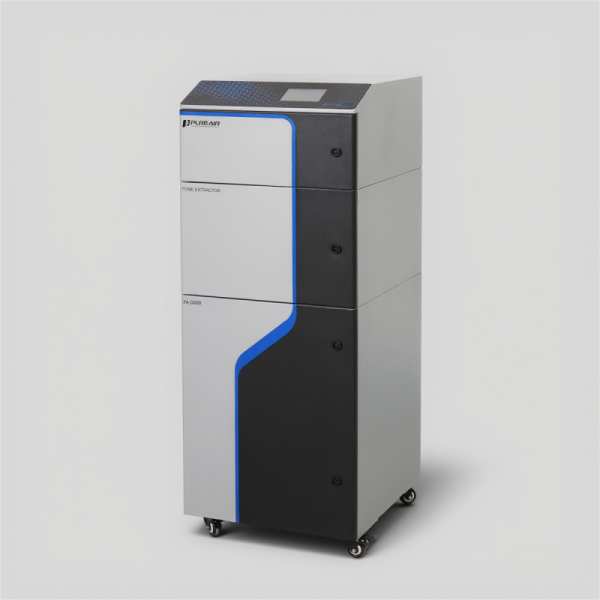
I ask because I’ve seen the cost of guessing: downtime, replaced optics, complaints from staff, and worse, chronic exposure issues. We need a clear way to think about filtration, airflow, and system fit — not just a glossy spec sheet. Let’s dive a bit deeper into why the usual fixes often miss the mark, and what to look for next.
Traditional solution flaws and hidden pains with uv laser marking machine setups
uv laser marking machine systems are great for precision work, but pairing them with the wrong fume control is a common mistake. I see shops install a basic hood or cheap fan and expect that to solve everything. It doesn’t. The typical failures are predictable: poor capture at the source, filters that saturate quickly, and inadequate airflow control. Those issues raise particulate matter and VOC exposure and can shorten the life of the laser optics — costs add up, amigo. Look, it’s simpler than you think to spot these gaps if you know what to measure.
What are the hidden user pains?
First, many users underestimate maintenance. HEPA filter swaps, activated carbon replacement, and checking pre-filters are chores that get skipped. Second, system mismatch: low airflow or wrong hood geometry leads to plume escape. Third, noise and energy use — nobody loves a loud unit running 24/7. Technically speaking, capture efficiency, airflow rate, and filter loading behavior matter. And then there are the electronic add-ons — things like power converters and edge computing nodes used for remote monitoring — which sound great but only help if the base capture works. We’ve seen repeat problems across shops — recurring nose and throat irritation, plus a slow build-up on nearby surfaces. Those are the real pains that sales sheets tend to ignore — funny how that works, right?
Looking forward: smarter principles and practical metrics for cleaner lines
When I think about the next generation of fume extractors, I focus on three principles: capture-first design, modular filtration, and measurable performance. A system tuned to the specific plume of an uv laser marking machine will place the intake close, control airflow precisely, and stage filters so activated carbon and HEPA do their jobs without killing suction. That means quieter operation, lower energy draw, and predictable maintenance. We want equipment that reports simple, useful numbers — filter differential pressure, airflow rate, and run-hours — not a flood of raw data.
What’s Next?
In practice, I recommend comparing case examples and future outlooks: look at machines that let you swap cartridges quickly, at units with clear service alarms, and at systems designed to reduce optical contamination. Many newer models use smarter fans and better duct geometry rather than brute force suction — that reduces noise and energy. Also, remote monitoring tied to simple alerts helps shops plan maintenance instead of reacting. — small changes, big difference.
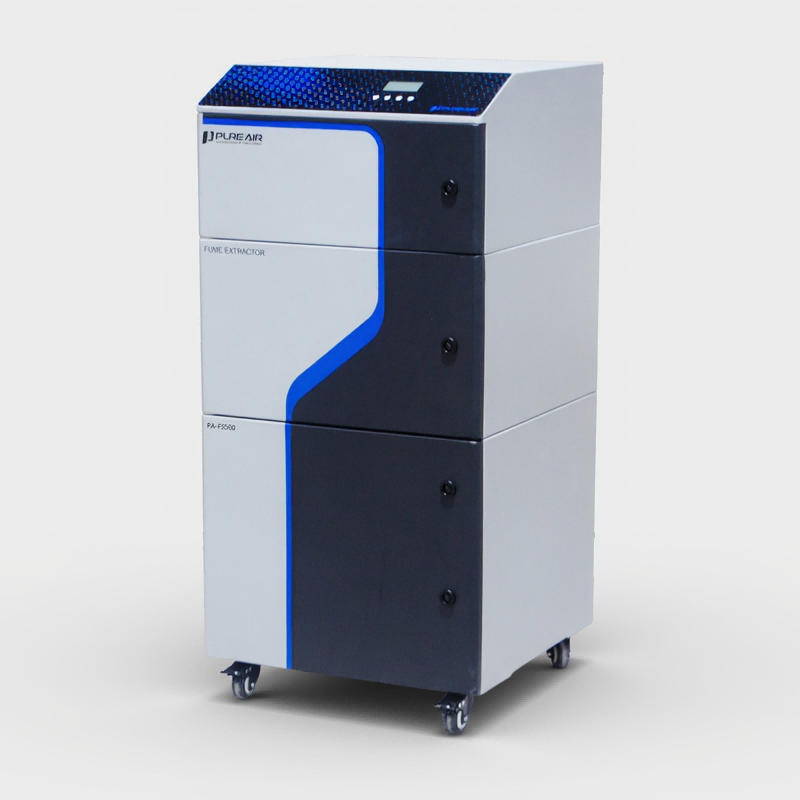
To wrap up, here are three key evaluation metrics I use when advising shops: 1) Capture efficiency at the nozzle or hood measured in percentage, 2) Clean airflow rate (CFM) relative to the marking plume size, and 3) Total cost of ownership including filter replacements and downtime. Those three tell you more than a glossy spec sheet ever will. I recommend starting with those tests, speaking with techs on the floor, and choosing a system that makes maintenance easy for the team. For reliable solutions and support, I trust companies that pair practical design with clear service paths — consider talking to PURE-AIR when you’re ready to step up your game.